
English| EUR
Suggested for you
More currencies
Choose a language
Above Chamonix, the Brévent side of the valley faces Mont Blanc head-on, which is why its slopes have carried tandem pilots for decades. This paragliding chamonix brevent guide sets out how the lift, the launch area and the morning air fit together. It explains what a flight day actually looks like before you commit to a date.
Quick answer
Arriving between 08:20 and 12:30 usually means steadier take-off wind and fewer people. Conditions govern everything: pilots stand down for strong valley wind, low cloud or storms, whatever the schedule says.
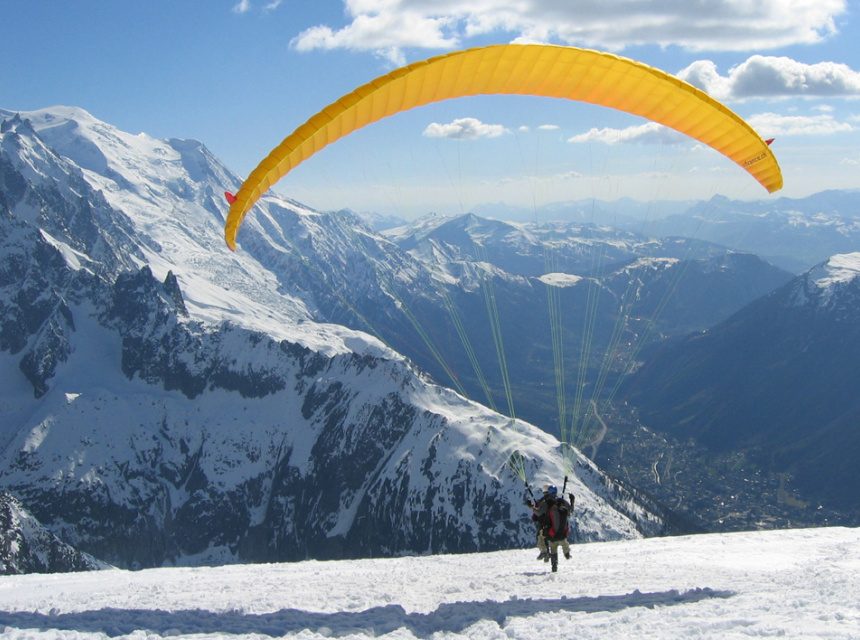
Paragliders share the Brévent slopes with hikers, climbers and photographers, and the mountain's north-facing position is the reason. That opposing aspect is what makes paragliding chamonix brevent distinctive among Alpine tandem sites: the flight path crosses open air with the Bossons and Taconnaz glaciers, the Aiguille du Midi and the Mer de Glace basin filling the far side of the frame the whole way down. The practical reality is that a tandem flight is a partnership between a qualified pilot, a certified wing and a narrow band of acceptable weather. Take-off happens from grassy or gravel launch areas served by the Planpraz and Brévent lift stages, and pilots read the valley breeze, thermal cycles and cloud base before committing. Passengers walk a few paces in harness while the canopy inflates behind them, then sit back into the seat as the ground drops away. Descents typically land near the Chamonix valley floor, close to the Bois du Bouchet and the Arve. Nothing about the sequence is improvised — the Fédération Française de Vol Libre sets the professional standards French tandem pilots work under. Weather, not the calendar, decides most flight days here. Morning air over the Aiguilles Rouges is generally smoother; by mid-afternoon in high summer, thermals strengthen and the valley wind can pick up enough to ground operations. Cancellations are common and rebooking is routine, so travellers who allow a spare day in Chamonix almost always fly. Anyone comparing operators for parapente à Chamonix should confirm launch altitude, flight duration and whether lift access is included, since those vary between providers rather than being fixed by the mountain. Read this paragliding chamonix brevent guide alongside the dedicated sections on timing, fares, access and preparation, then use the booking pages to check live availability for the dates that suit your trip.
“Weather, not the calendar, decides most flight days here.”
The best arrival window is 08:20–12:30, as this period offers optimal wind conditions for take-off and lighter crowds before the afternoon peak.
Stable air, 15°C to 25°C. Early flights avoid thermic turbulence.
Clear skies, 10°C to 20°C. Winds remain predictable during morning hours.
—. Reduced congestion at the launch site simplifies pilot preparation.
Verdict: The optimal slot for paragliding is weekday mornings during the months of June or September, arriving at 08:20 to secure the most stable meteorological conditions.
Tandem flights from Brévent hinge on a few things settled well before you reach the launch field, so work through these in order.
Everything you need to know about paragliding chamonix brevent
Tandem flights are designed for beginners and do not require prior experience. Certified instructors manage all technical aspects of the flight, allowing you to enjoy the aerial views of the Chamonix Valley.
Paragliding is weather-dependent, and instructors monitor wind and visibility closely to ensure safety. If conditions are deemed unsuitable for a tandem flight, operators will typically reschedule your session or provide a refund.